SkinPen Microneedling in London
What it can and cannot do — and how to know if it is right for your skin.
- Suitability assessed before any commitment to treatment
- Honest on results, downtime, and where it is not the right approach
- Medical-grade device with sterile single-use cartridges, doctor-led
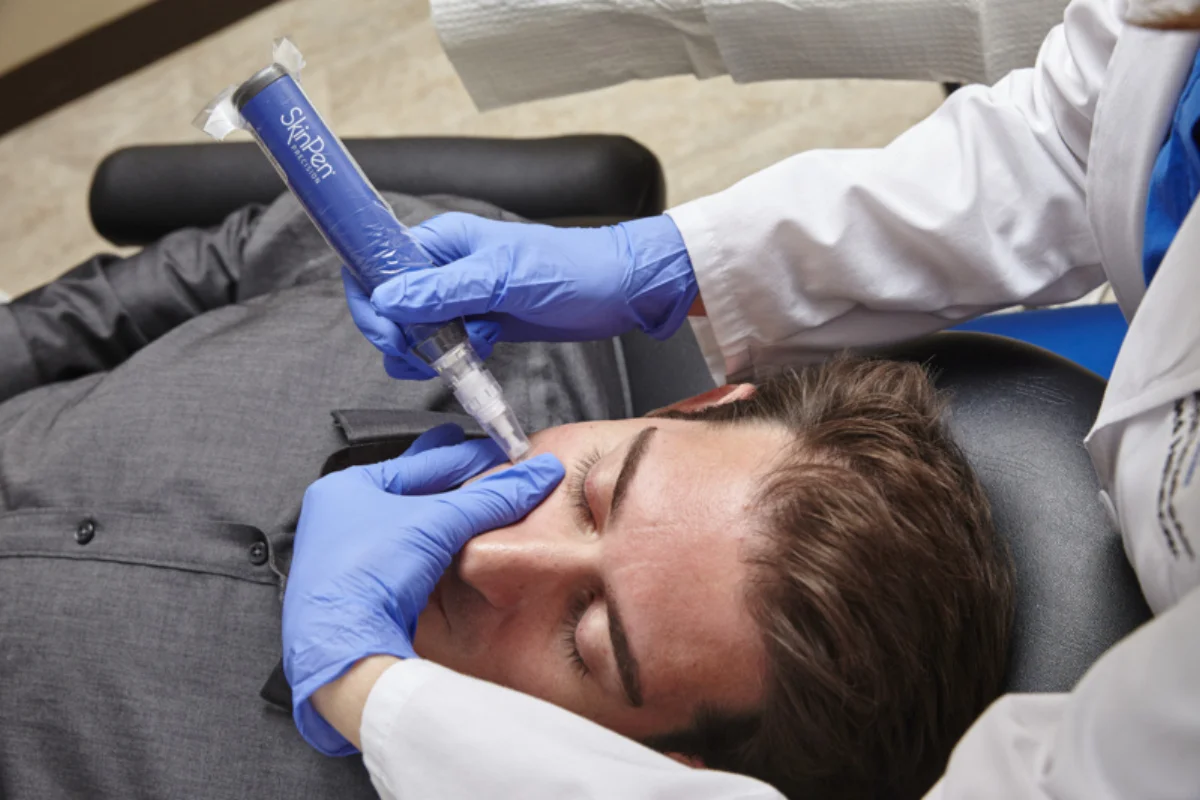
If You Are Considering SkinPen in London
You are probably weighing up whether it will actually make a visible difference — and whether anything could go wrong. Those are the right questions to start with.
SkinPen is a medical-grade microneedling device used to stimulate collagen production and improve skin texture, tone, and the appearance of scarring. It is not a universal fix, and results depend on several factors that are worth understanding before you commit.
For a full explanation of the device, the mechanism, and the clinical evidence, you can learn more about SkinPen microneedling. This page focuses on what patients most commonly want to know before deciding.
Who It May Help
SkinPen microneedling is most commonly used for:
- Acne scarring — surface texture improvement, particularly for atrophic scars
- Enlarged pores and uneven skin texture
- Fine lines and early signs of skin ageing
- General skin quality concerns — dullness, tone irregularity
- Scarring on areas beyond the face, including neck, décolletage, and body sites
Results tend to be more noticeable where the concern is surface texture, early scarring, or overall skin quality — rather than deeper structural changes or significant volume loss. Where the concern is primarily skin laxity or deeper tissue change, a different approach may be more appropriate, and that is assessed at consultation.
Before Looking at Benefits, Consider Whether It Is Right For You
SkinPen is not appropriate for everyone. The following are among the factors that may affect suitability:
- Active acne, rosacea, eczema or psoriasis in the treatment area
- Use of anticoagulant medication
- Recent isotretinoin (Roaccutane) use — a minimum interval is typically required
- A history of keloid or hypertrophic scarring
- Conditions affecting wound healing
- Certain skin tones where pigmentation changes are a higher risk and require careful assessment
This list is not exhaustive. Suitability is confirmed at consultation. If the treatment is not appropriate for your skin, we will tell you clearly — and where possible suggest an alternative approach.
The Questions Worth Asking First
Most patients' first concern is not whether they will improve — it is whether they could end up worse. That is worth addressing directly.
It can. Adverse outcomes — including new scarring, prolonged redness, and texture changes — do occur. These are not common outcomes when treatment is properly indicated, performed with sterile equipment, and aftercare is followed. But they are real, and they are more likely when the skin is treated in a contraindicated state or with inadequate hygiene controls. This is why candidate screening matters before any session.
Post-inflammatory hyperpigmentation — where the skin darkens in response to the treatment — is a real risk, particularly in patients with darker skin tones or a personal history of pigment sensitivity. This is assessed at consultation. If the risk is considered elevated for your skin, we will say so rather than proceed regardless.
A history of keloid or hypertrophic scarring is a contraindication for microneedling. Stimulating collagen repair in skin that overproduces collagen carries a real risk of worsening rather than improving the scarring. This is one of the first things established at consultation — it should not be assumed safe without that discussion.
Some patients experience redness or sensitivity lasting longer than the typical 24–48 hours. This is more common where the skin barrier is compromised, the skin is treated in a reactive state, or aftercare is not followed. Post-treatment guidance is provided and is specific to your skin, not a generic leaflet. If you experience anything unexpected after treatment, you can contact us directly.
Why Results Vary — and Why That Matters
Reading clinic reviews or before-and-after images gives you a version of outcomes that skews toward the best results. Understanding why results vary is more useful than looking at the best case.
Outcome depends on several factors: the type and depth of the concern being treated, how your skin heals at baseline, the number of sessions completed, how consistently you follow aftercare, and the technique and depth used during treatment.
Shallow surface texture concerns tend to respond more consistently. Deeper acne scars — particularly icepick or boxcar type — may show partial improvement rather than full resolution, and may respond better to different modalities such as laser resurfacing. Managing expectations around these presentations matters more than anywhere else.
At consultation, expected outcomes are discussed for your specific concern, not in general terms. If a different approach would serve you better, that is where it gets said.
Downtime — Concrete, Not Vague
Redness, sensitivity, and a short period of skin settling are part of the process. Plan around them — they are not optional side effects.
The skin will appear red and feel warm and sensitive. Most patients describe it as feeling tight and tender to touch. No makeup for at least 24 hours, longer if the skin is still reactive. Avoid sun exposure. Use gentle cleansing and SPF only.
The skin may feel dry, tight, or slightly flaky as the outer layer renews. Avoid gym and sweaty exercise, saunas, hot showers, swimming, and active skincare ingredients — retinoids, acids, and exfoliants — until the skin has settled. These restrictions are not cautious suggestions; they affect how the skin heals.
Most patients return to work the following day, though redness may still be visible. If you have an event where appearance matters, allow at least five to seven days after treatment. Improvement typically begins to appear four to six weeks after a session, with the most noticeable change developing over three to six months.
SkinPen vs Other Options
Patients considering SkinPen are usually also weighing up alternatives. Here is an honest comparison rather than a promotional one.
vs generic microneedling or at-home devices: The difference is not only the device — it is candidate screening, sterile single-use cartridges, controlled depth, and clinical oversight. At-home devices operate at shallower depths without comparable hygiene controls. There is no screening, which means contraindicated conditions can be treated without being identified. The risk is not just reduced efficacy; it is treating an inflamed or contraindicated skin condition without knowing it.
vs RF and ultrasound-based treatment: Exion uses radiofrequency and ultrasound energy without needles — it is non-invasive at the skin surface and may suit patients where texture improvement and skin tightening are both priorities, or where needle-based treatment is contraindicated. Whether SkinPen or Exion is more appropriate depends on your concern and skin type, not on which approach sounds more advanced.
vs laser resurfacing: Ablative laser options can achieve more significant resurfacing for deeper scarring, but involve longer recovery and carry a higher risk of pigment changes — particularly in darker skin tones. Microneedling tends to be the lower-downtime option with a better pigment safety profile, though it may require more sessions for comparable improvement in deeper concerns.
Treatment Pricing
Available as a single session or as a course of three. Areas and treatment plan confirmed at consultation.
Single treatment for mild concerns or first-time microneedling.
Course for fine lines, laxity, and texture across face and neck.
Broader rejuvenation across face, neck, and chest.
Advanced course including an additional body area such as abdomen or scarring sites.
The cost of clinic-based microneedling reflects several things that at-home or lower-cost options do not include: medical-grade single-use equipment, clinical candidate screening, controlled treatment depth, and aftercare support. A course of sessions is recommended for most concerns because collagen remodelling takes time — a single session produces some benefit, but the cumulative effect of a course is generally more significant.
Course fees can be spread over your treatment plan, interest-free with no charges of any kind — arranged with us at your consultation. See payment plans.
What the Consultation Covers
At consultation, we review your skin concern, medical history, current skincare routine, and any factors that might affect suitability or outcome. This includes contraindications that would rule out treatment, and factors that would change the approach taken.
We discuss what results are realistic for your specific presentation — not a general overview of what microneedling can do, but what it is likely to do for your skin, your concern, and your starting point.
If SkinPen is not the right approach, we will say so and explain why. If a different treatment — such as Exion or a referral — would better serve your concern, we will tell you.
Frequently Asked Questions
If you are considering SkinPen Microneedling in London
And want to understand whether it is the right approach for your skin, the consultation is where that gets assessed properly. No commitment required.
Questions? Contact us